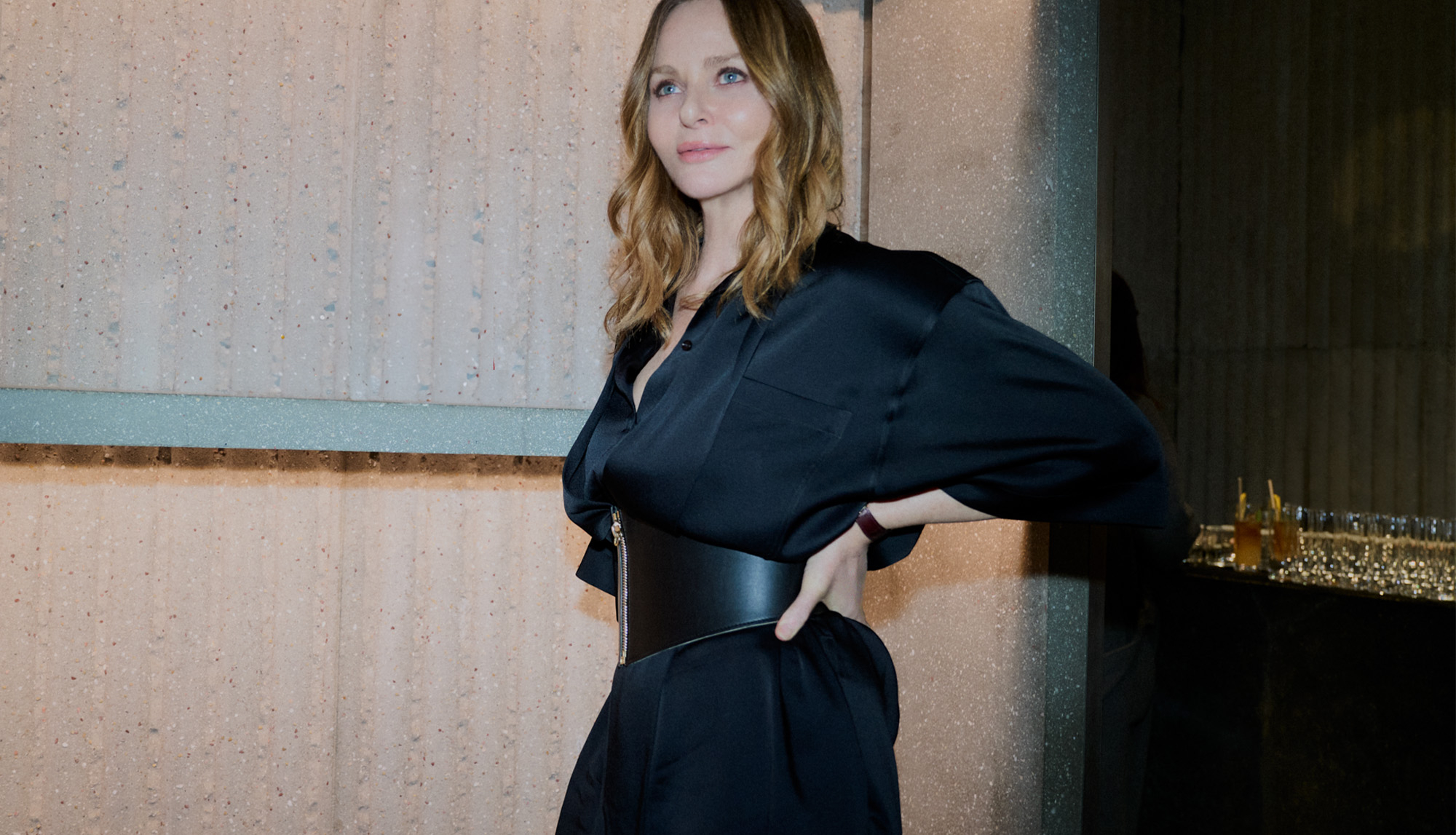
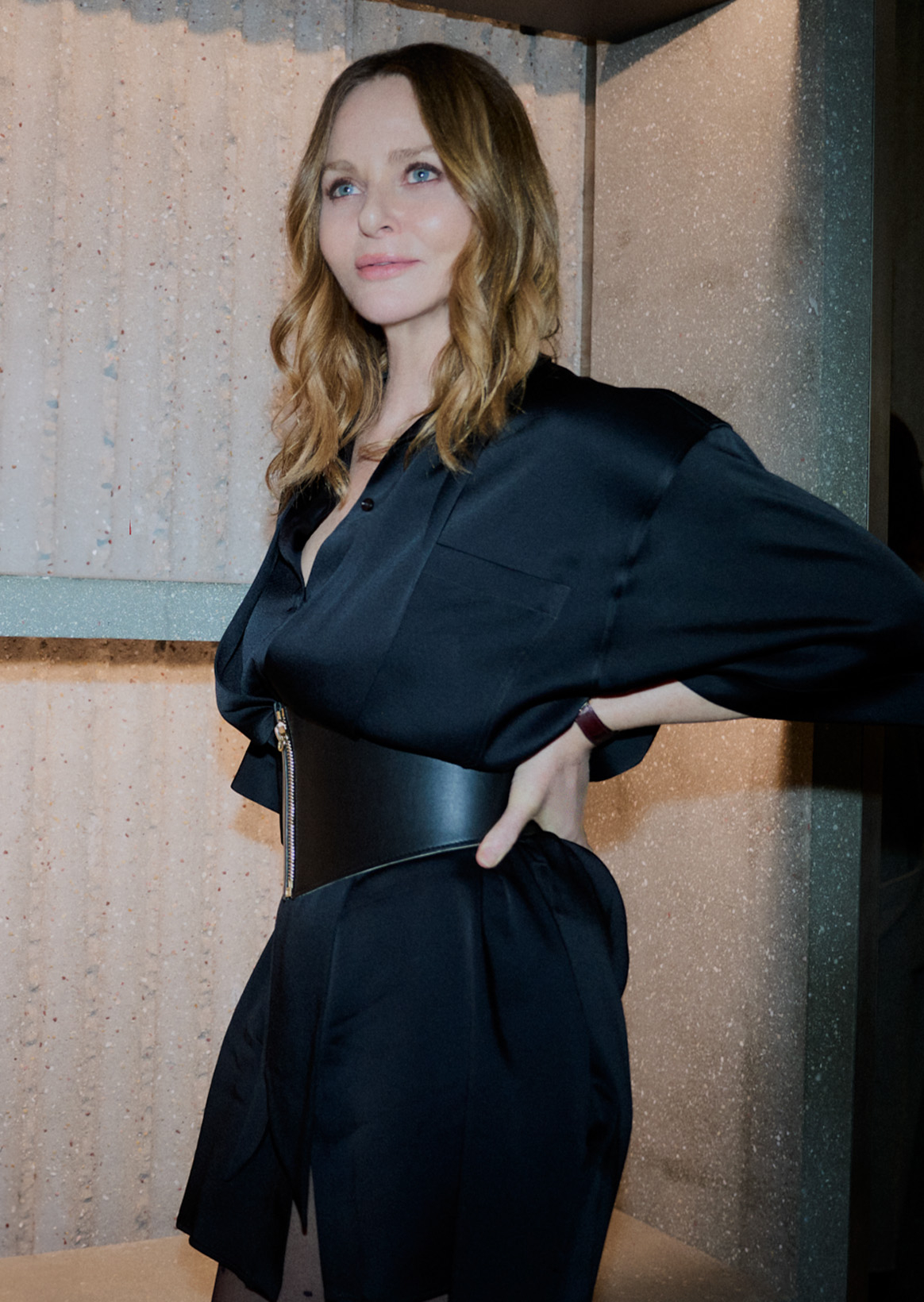
สเตลล่า แม็กคาร์ทนีย์ ก่อตั้งแบรนด์แฟชั่นหรูของตัวเอง Stella McCartney ในลอนดอน ประเทศอังกฤษ เมื่อปี 2544 ตั้งแต่เริ่มต้น เธอได้ยึดมั่นในความสมดุลระหว่างความยั่งยืนและแฟชั่นเป็นปรัชญาของแบรนด์ ในงานแสดงแฟชั่นฤดูร้อนปี 2025 ที่ปารีสแฟชั่นวีค เธอได้รับแรงบันดาลใจจากหนังสือ "The End of the End of the Earth" ของโจนาธาน แฟรนเซน นักเขียนและนักปักษีวิทยา และนำเสนอคอลเลกชันที่ทำจากวัสดุที่เป็นมิตรต่อสิ่งแวดล้อมถึง 96% โดยไม่ทำร้ายสิ่งมีชีวิตใดๆ ในวันที่ 18 เมษายน (วันศุกร์) ร้าน Stella McCartney สาขาใหม่จะเปิดที่ Shibuya PARCO เพื่อเป็นการเฉลิมฉลองการเปิดตัวสีพิเศษเฉพาะญี่ปุ่น (สีดำ) ของรองเท้า RASANT ซึ่งเป็นการร่วมมือกับ Adidas เธอได้เดินทางมาเยือนญี่ปุ่น และเราได้พูดคุยกับเธอเกี่ยวกับสภาพแวดล้อมที่หล่อเลี้ยงความคิดสร้างสรรค์อันเป็นเอกลักษณ์ของเธอ และความคิดเห็นของเธอเกี่ยวกับแบรนด์ของเธอเอง
*สามารถดูเวอร์ชันภาษาอังกฤษได้ด้านล่าง
- Photo
- Sachiko Saito
- Text
- Tomoko Ogawa
- Edit
- RIDE Inc.
อะไรคือสิ่งที่มีอิทธิพลมากที่สุดในการหล่อหลอมตัวตนของคุณตั้งแต่ยังเด็ก?
การตัดสินใจสร้างแบรนด์ที่ยั่งยืนนั้นง่ายมาก เพราะเป็นสภาพแวดล้อมที่ฉันเติบโตมา และเป็นสิ่งที่ฉันได้รับการสอนมาตั้งแต่เด็ก ความทรงจำที่ประทับใจที่สุดตอนอายุสี่หรือห้าขวบคือการที่พ่อแม่ใช้ตู้เสื้อผ้าร่วมกัน เสื้อผ้าในสมัยนั้นเป็นสไตล์ที่ดูเป็นกลางทางเพศอย่างมาก เป็นยุคของดนตรีแกลมร็อกที่วง Wings กำลังโด่งดัง เสื้อผ้าครึ่งหนึ่งที่ฉันคิดว่าเป็นของแม่นั้นจริงๆ แล้วพ่อก็เคยใส่ด้วย ตั้งแต่นั้นมา ฉันก็เจอเสื้อลายดอกไม้ในตู้เสื้อผ้าของแม่แล้วคิดว่า "เสื้อตัวนี้เท่จัง!" แล้วก็เจอรูปพ่อใส่เสื้อตัวนั้นอยู่ แม้ว่าจะเป็นเรื่องเมื่อหลายปีก่อน แต่ก็ยังรู้สึกว่าทันสมัย และยังคงเป็นหัวข้อที่ได้รับความนิยมในปัจจุบัน การเติบโตมาท่ามกลางเสื้อผ้าแบบนั้นมีอิทธิพลอย่างมากต่อตัวฉันและวิธีการทำงานของฉันในปัจจุบัน
— มีเพลงใดบ้างที่สร้างความประทับใจไม่รู้ลืมให้กับคุณ?
ฉันมักจะหวนกลับไปฟังเพลงของพ่อแม่เสมอ โดยเฉพาะเพลงที่พวกท่านทำตอนออกทัวร์กับวง Wings นั่นคือช่วงวัยเด็กของฉัน การขี่ม้าในป่าเขาของสกอตแลนด์ การนั่งรถทัวร์ไปแสดงคอนเสิร์ตครั้งต่อไป มันเป็นช่วงเวลาที่น่าตื่นเต้นและเปี่ยมไปด้วยอารมณ์ความรู้สึกอย่างเหลือเชื่อในชีวิตของฉัน เพลงของพวกท่านฝังลึกอยู่ในดีเอ็นเอของฉัน ทั้งในฐานะนักออกแบบและในฐานะคนคนหนึ่ง
—คุณช่วยเล่าให้เราฟังเกี่ยวกับสภาพแวดล้อมที่หล่อเลี้ยงความคิดริเริ่มสร้างสรรค์ของคุณได้ไหม?
ฉันคิดว่ามีความคล้ายคลึงกันที่น่าสนใจระหว่างการออกแบบแฟชั่นและสถาปัตยกรรม แต่ตอนที่ฉันเรียนอยู่ที่ Central Saint Martins ฉันตระหนักว่าฉันไม่ได้เรียนรู้ด้านเทคนิคของการออกแบบแฟชั่น เน้นไปที่ความคิดสร้างสรรค์มากกว่าการเรียนรู้เรื่องเทคนิคต่างๆ เช่น การตัดแพทเทิร์นสำหรับแจ็กเก็ต ซึ่งเป็นสิ่งที่ฉันต้องการทำ ดังนั้นฉันจึงไปที่ Savile Row ฉันจำได้ว่าได้ทำงานกับคนที่เปรียบเสมือน "สถาปนิก" ของอุตสาหกรรมแฟชั่น พวกเขาเป็นผู้ที่วางรากฐาน การทำแจ็กเก็ตก็เหมือนกับการสร้างอาคาร และฉันพบว่ามันน่าสนใจอย่างเหลือเชื่อ ดังนั้นฉันจึงฝึกงานที่นั่นเป็นเวลาสามปีและเชี่ยวชาญวิธีการขึ้นรูปผ้าด้วยไอน้ำ ทักษะที่ฉันเรียนรู้ในช่วงสามปีนั้นเป็นรากฐานของฉันเสมอมา และฉันคิดว่าการตัดเย็บเป็นส่วนสำคัญของดีเอ็นเอของ Stella McCartney เสมอมาและตลอดไป
—ช่วงเวลาหรือเหตุการณ์สำคัญที่สุดที่เปลี่ยนชีวิตคุณไปอย่างสิ้นเชิงมีอะไรบ้าง?
งานแสดงผลงานจบการศึกษาของฉันที่ Central Saint Martins นั้นมีความสำคัญมาก ฉันยังจำได้ดีว่ามันเป็นภาพที่เหลือเชื่อมาก มีเคท มอสส์ นาโอมิ แคมป์เบล และยาซมิน เลอ บอน มาเป็นนางแบบสวมใส่เสื้อผ้าของฉัน
—แบรนด์ Stella McCartney ซึ่งยังคงรักษาสมดุลระหว่างแฟชั่นและความยั่งยืน ยึดมั่นในคุณค่าหลักอะไรบ้าง?
ค่านิยมของเราหยั่งรากอยู่ในความเป็นผู้หญิงสไตล์สเตลล่าที่สง่างาม—กล้าหาญ ทรงพลัง และไม่เกรงกลัวที่จะสื่อสารข้อความที่จริงจัง เราต้องการให้ผู้หญิงรู้สึกมั่นใจและแข็งแกร่ง และเสื้อผ้าของเราได้รับการออกแบบให้สวมใส่สบายและใช้งานได้จริงอย่างเป็นเอกลักษณ์ เรายังตระหนักถึงการเป็นบริษัทที่มีจริยธรรมและทันสมัย โดยคำนึงถึงทรัพยากรที่เราใช้และผลกระทบต่อสิ่งแวดล้อมอยู่เสมอ เราภูมิใจมากที่แบรนด์ Stella McCartney กำลังคิดค้นวิธีการใหม่ๆ เพื่อความยั่งยืนมากยิ่งขึ้น ตั้งแต่การออกแบบไปจนถึงแนวทางการดำเนินงานในร้านค้าและการผลิตสินค้า
วิถีชีวิตของคุณสะท้อนออกมาในแบรนด์และบริษัทของคุณใช่ไหม?
ฉันเป็นมังสวิรัติมาตลอดชีวิต และคอลเลกชันของฉันไม่ใช้หนัง ขนนก ขนสัตว์ หรือหนังสัตว์หายากใดๆ ไม่เพียงเท่านั้น แต่ฉันยังร่วมมือกับนักประดิษฐ์รุ่นใหม่เพื่อสร้างทางเลือกที่เป็นมิตรต่อสิ่งมีชีวิตและโลกของเรา กองทุนเพื่อการลงทุนที่ฉันร่วมก่อตั้ง SOS Fund สนับสนุนผู้ที่มีวิสัยทัศน์ด้านความยั่งยืนเหล่านี้ และได้ช่วยนำวัสดุใหม่ๆ ออกสู่ตลาดแล้ว เช่น เส้นด้ายสาหร่าย Kelsun™ (วัสดุชีวภาพที่ได้จากเส้นใยสาหร่ายทะเล มีลักษณะคล้ายเส้นด้าย) และ Protein Evolution (โพลีเอสเตอร์ที่รีไซเคิลได้ไม่จำกัดจำนวนครั้ง ซึ่งรีไซเคิลจากขยะพลาสติกโดยใช้ AI และเอนไซม์) เพื่อให้เป็นไปตามคำมั่นสัญญาของเรา เราจึงปฏิบัติตามหลักการเหล่านี้ทุกวันใน Stella
—ด้วยประสบการณ์ด้านการผลิตของคุณ ซึ่งให้ความสำคัญกับสวัสดิภาพสัตว์และการอนุรักษ์สิ่งแวดล้อม คุณมีความคิดเห็นอย่างไรเกี่ยวกับผลกระทบที่จะเกิดขึ้นกับผู้สวมใส่เสื้อผ้าและสังคมโดยรวม?
ตั้งแต่เริ่มแรก การดูแลสัตว์เป็นแรงผลักดันสำคัญเบื้องหลังการตัดสินใจส่วนตัวและวิสัยทัศน์ของฉันสำหรับแบรนด์ Stella McCartney ทุกอย่างดูสมเหตุสมผลสำหรับฉันเมื่อ 17 ปีที่แล้ว เมื่อฉันได้อ่านรายงาน "เงาอันยาวนานของปศุสัตว์" ของสหประชาชาติ และเชื่อมโยงปรัชญานี้เข้ากับผลกระทบต่อสิ่งแวดล้อมจากการเลี้ยงปศุสัตว์
อุตสาหกรรมแฟชั่นเป็นหนึ่งในอุตสาหกรรมที่สร้างความเสียหายต่อโลกมากที่สุด อุตสาหกรรมปศุสัตว์เป็นต้นเหตุของการปล่อยก๊าซเรือนกระจกทั่วโลกประมาณ 14.5% ซึ่งสูงกว่าอุตสาหกรรมการขนส่งที่ 13% และนี่คือจุดที่อุตสาหกรรมหนังเข้ามาเกี่ยวข้อง หนังไม่เพียงแต่ก่อให้เกิดการทำลายป่าฝนจากการถางป่าเพื่อเลี้ยงวัวเท่านั้น แต่ยังปล่อยสารเคมีที่เป็นพิษประมาณ 300 กิโลกรัมสู่สิ่งแวดล้อมและระบบน้ำในท้องถิ่นอีกด้วย ยิ่งไปกว่านั้น หนังต้องผ่านกระบวนการฟอกหนังด้วยสารเคมีก่อมะเร็ง ซึ่งมักจะทำให้อายุขัยของคนงานในโรงงานในประเทศที่ยากจนที่สุดสั้นลงอย่างมาก มันโหดร้ายในทุกระดับ
ในแต่ละปีมีสัตว์มากกว่าหนึ่งพันล้านตัวถูกเลี้ยงและฆ่าเพื่อนำหนังไปใช้ในอุตสาหกรรมแฟชั่น ดังนั้น ฉันเชื่อว่าสิ่งที่สำคัญที่สุดที่สาธารณชน ธุรกิจ และรัฐบาลควรให้ความสนใจคืออุตสาหกรรมปศุสัตว์และผลกระทบต่อสิ่งแวดล้อมและอุตสาหกรรมของเรา ธุรกิจควรเลิกใช้วัสดุและวิธีการแบบดั้งเดิมที่เป็นอันตรายซึ่งทำร้ายคนงานและสัตว์ เราจำเป็นต้องก้าวข้ามข้อจำกัดของวัสดุที่อุตสาหกรรมเคยใช้มา และสร้างสรรค์นวัตกรรมเพื่อหาทางเลือกอื่น หากเราร่วมมือกันเพื่อบรรลุเป้าหมายเหล่านี้ เราจะสามารถเริ่มต้นทำธุรกิจในแบบที่ฟื้นฟูโลกได้ แทนที่จะเป็นการเอาเปรียบโลก
—ในฐานะผู้บริโภค เราสามารถทำอะไรได้บ้าง?
พวกคุณทุกคนมีบทบาทสำคัญในการเรียกร้องความโปร่งใสและความรับผิดชอบจากแบรนด์และรัฐบาล ในทางกลับกัน รัฐบาลจำเป็นต้องสร้างแรงจูงใจให้ธุรกิจดำเนินงานอย่างยั่งยืนมากขึ้น ตัวอย่างเช่น ในสหรัฐอเมริกา แบรนด์ของฉันต้องเสียภาษีสูงถึง 30% เมื่อนำเข้าผลิตภัณฑ์ที่ทำจากวัสดุทางเลือกที่ไม่ใช่หนังสัตว์ ซึ่งเป็นผลโดยตรงจากการล็อบบี้ของอุตสาหกรรมหนัง และขัดแย้งกับเป้าหมายร่วมกันของเราในการต่อสู้กับการเปลี่ยนแปลงสภาพภูมิอากาศและปกป้องโลกเพื่อคนรุ่นหลัง
—ขณะนี้คุณกำลังมุ่งเน้นโครงการพัฒนาวัสดุหรือโครงการอื่นๆ อยู่บ้างหรือไม่?
เรารู้สึกภาคภูมิใจอย่างยิ่งที่คอลเลกชันฤดูร้อนปี 2025 ใหม่ของเราเป็นคอลเลกชันที่ยั่งยืนที่สุดเท่าที่เคยมีมา โดยวัสดุถึง 96% เป็นมิตรต่อสิ่งแวดล้อม การแสดงแฟชั่นโชว์ได้รับแรงบันดาลใจจากหนังสือของ Jonathan Franzen เรื่อง "The End of the End of the Earth" ซึ่งเป็นการเฉลิมฉลองนกและเป็นการเรียกร้องให้ลงมือทำ เนื่องจากมีนกมากกว่า 3.4 พันล้านตัวถูกทำร้ายหรือถูกฆ่าตายในแต่ละปี คอลเลกชันฤดูร้อนปี 2025 จึงไม่ใช้หนัง ขนนก ขนสัตว์ หรือหนังสัตว์หายาก แต่ใช้วัสดุที่เป็นนวัตกรรมใหม่และปราศจากการทารุณกรรมสัตว์แทน
เพื่อเป็นทางเลือกแทนหนังที่ได้จากสัตว์ เรามีกระเป๋าถือใบแรกของโลกที่ทำจาก Hydefy (สิ่งทอจากเชื้อรา), เสื้อผ้า Kelsun™ (สิ่งทอจากสาหร่ายทะเลชนิดแรกที่วางจำหน่ายในเชิงพาณิชย์สำหรับสินค้าหรูหรา) และผ้าถักเนื้อนุ่มราวกับก้อนเมฆที่ปั่นจากเส้นใยไนลอนรีไซเคิล PEEKABOO นอกจากนี้เรายังมีเครื่องประดับลายรูปนกพิราบ ซึ่งสร้างสรรค์ร่วมกับ 886 โดย The Royal Mint โดยใช้ทองคำและเงินรีไซเคิลจากขยะอิเล็กทรอนิกส์และขยะทางการแพทย์ การสนับสนุนการเข้าสู่ตลาดและการขยายขนาดของนักสร้างสรรค์รุ่นใหม่มีความสำคัญอย่างยิ่งสำหรับฉัน และเป็นโอกาสที่น่ายินดีอย่างแท้จริงที่ได้ร่วมงานกับสิ่งทอที่น่าทึ่งเหล่านี้ในฤดูกาลนี้!
—คำพูดใดบ้างที่คุณประทับใจไม่ลืมตลอดอาชีพการงานของคุณ?
ฉันถูกเรียกว่า "พวกอนุรักษ์สิ่งแวดล้อมสุดโต่ง"! ผู้คนบอกว่ามันเป็นไปไม่ได้ที่จะสร้างแบรนด์แฟชั่นที่ประสบความสำเร็จโดยไม่ใช้ผลิตภัณฑ์จากสัตว์ แต่ฉันก็ทำได้สำเร็จ ฉันคิดว่านี่เป็นสิ่งที่ทันสมัยที่สุดที่แบรนด์ของเราเคยทำมา เราทำให้สิ่งที่เป็นไปไม่ได้เป็นไปได้ และพิสูจน์แล้วว่าคุณสามารถมีสินค้าหรูหราสวยงามน่าปรารถนาได้โดยไม่ทำร้ายสัตว์หรือโลก การเปลี่ยนแปลงกำลังเกิดขึ้นทีละเล็กทีละน้อย แต่เราต้องการให้ผู้คนเข้าร่วมกับเรามากขึ้น ยังมีอีกมากมายที่ต้องทำ!
—คุณคิดว่าอะไรคือสิ่งจำเป็นที่จะช่วยให้คุณทำงานที่คุณอยากทำจริงๆ ในชีวิตต่อไปได้?
ถึงแม้ว่าจะถูกบอกว่าธุรกิจจะไม่ประสบความสำเร็จหากคุณยึดมั่นในความเชื่อและทำสิ่งต่างๆ ในแบบของคุณเอง คุณก็ไม่ควรเปลี่ยนวิธีการทำงานของคุณ ฉันรู้สึกว่าสิ่งที่เราทำที่ Stella McCartney และสิ่งที่เราทำมาตั้งแต่เริ่มต้น ในที่สุดก็ได้รับการยอมรับและให้ความสำคัญอย่างจริงจัง นี่เป็นเกียรติอย่างยิ่ง สถานการณ์นี้เป็นเวทีที่ยอดเยี่ยมในการท้าทายสถานะที่เป็นอยู่ และส่งเสริมและพูดคุยเกี่ยวกับวิธีการทำธุรกิจอื่นๆ ในอุตสาหกรรมแฟชั่น เพื่อสร้างผลกระทบเชิงบวกต่อโลก
—โปรดเล่าความประทับใจของคุณที่มีต่อประเทศญี่ปุ่นและความทรงจำจากการเดินทางมาเยือนให้เราฟัง
ฉันชื่นชอบวัฒนธรรม แฟชั่น ดนตรี และศิลปะของญี่ปุ่นมาโดยตลอด หนึ่งในโมเมนต์ที่น่าจดจำที่สุดจากการไปเยือนญี่ปุ่นครั้งล่าสุดของฉันคือการได้พบกับโยชิโตโมะ นารา เพื่อนสนิทของฉัน ขณะที่ฉันอยู่ในโตเกียว เขาเป็นศิลปินที่ยอดเยี่ยมอย่างแท้จริง และฉันรู้สึกว่าเรามีวิสัยทัศน์และค่านิยมที่คล้ายคลึงกัน
Stella McCartney established her eponymous luxury fashion house, Stella McCartney, in London in 2001. Since then, she has championed the coexistence of sustainability and fashion as the core philosophy of her label. At the Summer 2025 runway show during Paris Fashion Week―drawing inspiration from author and birdwatcher Jonathan Franzen’s book The End of the End of the Earth―she presented a collection made with 96% environmentally conscious materials, produced without harming any living creatures. On Friday, April 18, a new Stella McCartney store will open in Shibuya PARCO. Visiting Japan to commemorate the launch of a Japan-exclusive color (BLACK) of RASANT, a collaboration with Adidas, she spoke about the environment that shaped her distinctive creativity, as well as her thoughts on the brand.
——What has had the greatest influence on shaping who you are since childhood?
The decision to create a sustainable brand was easy; it’s what I grew up with and what I was taught from a young age. Some of my biggest memories from when I was four or five year old involve sitting in my parents’ wardrobe, and what was fascinating was I realised my mum and dad shared it. There was this absolute androgyny. It was this period of glam rock, during Wings. Half the things I assumed were mum’s, dad was actually wearing as well. They would swap. I’ve since worn a flowery shirt out of the archive and thought, ‘Oh look at this blouse of my mum’s, it’s so cool!’ Then we’d find a photo of my dad wearing it. It’s so modern; this was years ago, but today it’s a cutting-edge conversation to have. So, this upbringing and being around clothes from a very young age was a huge influence on me and has heavily inspired how I work today.
——Are there any films, music, or books (including photography books) that have left a lasting impression on you?
I always go back to my parents’ music – especially their time when they were touring with Wings. That was my childhood: going from riding on horseback in the wilds of Scotland to being on a tour bus on the way to the next gig. It was an incredibly exciting and emotional time in my life. Their music is in my DNA as a designer and a person.
——Could you share the environments, experiences, or things that have nurtured your originality and creativity?
I like to think that there are interesting similarities between fashion design and architecture in that when I was at Central Saint Martins, I realised that I wasn't learning the technical side of fashion design. The focus was on being creative rather than learning the technicalities, such as cutting patterns for a tailored jacket, for example, which is what I wanted to do, so I went into Savile Row. I remember working with those guys who I thought were like the builders of the fashion industry – you know, the nuts and bolts. Making a jacket is really like building a building, and it was just fascinating to me. I did that for three years, and I just about learned how to set a steam edit. I am constantly referring back to the skills I learnt in those three years, and tailoring is and always will be completely part of the Stella McCartney DNA.
——Can you tell us about a defining moment or event that was a game-changer for you?
I would say my graduation show from Central Saint Martins was pretty major. Having Kate, Naomi, and Yasmin there, wearing my pieces, will forever be something I am incredibly proud of.
——Your brand is well established as one that balances fashion and sustainability. What are the core values that Stella McCartney holds dear?
Our values are rooted in our Stella women – bold, badass, and unafraid to address serious messages, but always with a lightness of touch. I want them to feel confident and powerful, but with a signature effortlessness and ease. We are also committed to being an ethical and modern company, taking full responsibility for the resources we use and the impact we have on the environment. I am so proud of how we are constantly innovating new ways to become more sustainable, from designing to store practices and product manufacturing.
——Your brand and company reflect the very way you live your life, don't they?
I have been a vegetarian my whole life and have never used any leather, feathers, fur, or skins in any of my collections. Instead, I work with next-gen innovators to create alternatives that are kinder to our fellow creatures and Mother Earth. SOS Fund is an investment fund that I co-founded, which supports these sustainable visionaries and has already helped bring to market new materials like Kelsun™ -a bio-based material derived from seaweed, with a yarn-like texture and Protein Evolution – an infinitely recyclable polyester recycled from plastic waste using AI and enzymes. If you are going to talk the talk, you need to walk the walk, and we do that every day here at Stella.
——Prioritizing animal welfare and environmental conservation, how do you view the impact of your production process―not only on those who wear your designs but also on society as a whole?
Since day one, animals and their welfare have driven choices in my personal life as well as my vision for the house of Stella McCartney. When I connected this ethos with the impact that animal agriculture has on the environment after reading the UN’s Livestock’s Long Shadow report 17 years ago, it all clicked for me.
Fashion is one of the most harmful industries to the planet. Animal agriculture accounts for approximately 14.5% of the world’s greenhouse gas emissions, which is more than the transport industry at 13%. This is where leather comes from. Not only is leather driving the destruction of our rainforests by creating land for cattle, but it is also releasing almost 300kg of toxic chemicals into the environment, which are also entering local water systems. Leather also needs to be tanned with carcinogenic chemicals that drastically shorten the lives of factory workers, often in the most impoverished nations. It is cruel on every level.
Over one billion animals are raised and killed to supply leather to the fashion industry every year, so for me, the single most important thing for the public, businesses, and governments to focus on is animal agriculture and how it impacts our environment and industry.
Businesses need to transition away from these conventional, harmful materials and methods that hurt workers and animals. We need to get creative and innovative with alternatives, moving beyond the limited materials that the industry has been traditionally working with. If we work collaboratively with these goals, we can actually begin doing business in a way that regenerates our planet instead of only taking from it.
——Is there anything we, as consumers, can do to help?
The public too has an integral role to play by demanding transparency and accountability from brands and governments. Meanwhile, governments need to create incentives for businesses to work in a more sustainable way. For instance, in the US, my brand is taxed up to 30% for importing goods crafted from our vegan alternatives to leather. This is a direct result of the leather industry’s lobbying and is counter-productive to our shared goals of fighting the climate crisis and protecting our planet for future generations.
——Are there any specific material developments or projects you are currently focusing on?
My new Summer 2025 collection was crafted with 96% conscious materials – our most sustainable to date, which I am so proud of. The runway show was a celebration of birds as well as a call to action, inspired by author, birdwatcher, and Jonathan Franzen’s book The End of the End of the Earth. Over 3.4 billion birds are harmed or killed for down annually; the Summer 2025 collection avoids leather, feathers, fur, and exotic skins, opting instead for cruelty-free innovations, where neither the final products nor their ingredients were tested on animals at any point during development.
Alternative leathers included the world-first handbag made from fungi-based Hydefy, garments crafted from Kelsun™ ,-a seaweed-based textile available commercially for the first time in luxury, and-cloud-like knits spun from PEEKABOO recycled nylon yarn. I also designed wearable bird sculptures with 886 by The Royal Mint – each piece cast in metals repurposed from medical and electronics waste. Supporting the next generation of innovators in going to market and scaling is extremely important to me, so getting to work with these incredible textiles this season was really exciting.
——Among all your experiences, is there a statement that you will never forget?
It was being called an “Eco-Weirdo”! People said I could never have a successful business without using animal-based materials. I certainly have shown them, wouldn’t you say? I think it’s the most modern thing we have ever done as a brand – we challenged the norm and proved you can have beautiful, desirable luxury without harming animals or the planet. I can see the shift happening slowly, but I still need more people to come to my side of the world. There’s a lot of work to be done!
——When facing challenges in your career or life, how have you managed to overcome them?
I’ve stuck by my beliefs and haven’t changed the way I want to work, even when people would tell me I wouldn’t have a successful business if I did things my way. I feel like what we do at Stella McCartney, and what we’ve been doing from the start, is finally being recognised and taken seriously. I find that to be a great honor. It has given us this incredible platform to encourage and talk about other ways of doing business in fashion, to challenge the status quo and have a positive impact on the planet.
——What is your impression of Japan? Do you have any memorable experiences here?
I have always loved Japanese culture and the celebration of fashion, music, and art. One of my favourite recent memories was meeting up with my dear friend Yoshitomo Nara while I was in Tokyo. He is such an incredible artist, and we share such a similar vision and values.

สเตลล่า แม็กคาร์ทนีย์
สเตลลา แม็กคาร์ทนีย์ เกิดในลอนดอนในครอบครัวนักสร้างสรรค์ที่โด่งดังในสายตาสาธารณชน แต่ใช้ชีวิตธรรมดาๆ ในบ้าน เธอเติบโตทั้งในเมืองและชนบทของอังกฤษ โดยได้รับการปลูกฝังจากลินดา แม็กคาร์ทนีย์ ผู้เป็นมารดาและแรงบันดาลใจของเธอ (ช่างภาพ มังสวิรัติ และนักเคลื่อนไหวเพื่อสิทธิสัตว์) และค่านิยมและความชื่นชมในความงามที่มีมาแต่กำเนิดของเธอยังคงเป็นแรงบันดาลใจให้เธอมาจนถึงทุกวันนี้
เขาจบการศึกษาจาก Central Saint Martins ในปี 1995 และเป็นที่รู้จักในทันทีจากฝีมือการตัดเย็บที่เฉียบคมและสุนทรียภาพที่โดดเด่น ในปี 1997 เขาได้ดำรงตำแหน่งผู้อำนวยการฝ่ายสร้างสรรค์ของ Chloé ในปารีส และนำพาแบรนด์แฟชั่นนี้ไปสู่ความสำเร็จ
ในปี 2001 สเตลลา แม็กคาร์ทนีย์ ก่อตั้งแบรนด์แฟชั่นหรูของเธอเอง โดยนำเสนอคอลเล็กชั่นแรกในปารีสในเดือนตุลาคมปีเดียวกัน สเตลลาเป็นมังสวิรัติมาตลอดชีวิต และยึดมั่นในแนวทางที่สร้างสรรค์มาตั้งแต่เริ่มก่อตั้งแบรนด์ โดยไม่ใช้หนัง ขนนก หรือขนสัตว์เลย นับตั้งแต่ก่อตั้ง สเตลลาได้ขยายความเป็นผู้นำด้านความยั่งยืนอย่างต่อเนื่องผ่านนวัตกรรมและความร่วมมือในด้านวัสดุและห่วงโซ่อุปทาน
สเตลล่า แม็กคาร์ทนีย์
สเตลลา แม็กคาร์ทนีย์ เกิดในลอนดอนในครอบครัวนักสร้างสรรค์ผู้โด่งดังในสายตาสาธารณชน แต่ใช้ชีวิตเรียบง่ายในบ้าน เธอเติบโตทั้งในเมืองและชนบทของอังกฤษ โดยได้รับการหล่อหลอมจากมารดาผู้ล่วงลับและแรงบันดาลใจของเธอ ลินดา แม็กคาร์ทนีย์ ช่างภาพ มังสวิรัติ และนักเคลื่อนไหวเพื่อสิทธิสัตว์ ซึ่งคุณค่าและความชื่นชมในความงามที่มีมาแต่กำเนิดของเธอยังคงเป็นแรงบันดาลใจให้เธอจนถึงทุกวันนี้ หลังจากจบการศึกษาจากเซ็นทรัลแซงต์มาร์ตินส์ในปี 1995 เธอได้รับการยอมรับอย่างรวดเร็วจากฝีมือการตัดเย็บที่เฉียบคมและสุนทรียภาพที่โดดเด่น ในปี 1997 เธอได้รับการแต่งตั้งให้เป็นผู้อำนวยการฝ่ายสร้างสรรค์ของ Chloé ในปารีส ซึ่งเธอได้นำพาแบรนด์ไปสู่ความสำเร็จอย่างยิ่งใหญ่ ในปี 2001 เธอได้เปิดตัวแบรนด์แฟชั่นหรูของตัวเองและเปิดตัวคอลเล็กชั่นแรกในปารีสในเดือนตุลาคมปีนั้น สเตลลาเป็นมังสวิรัติมาตลอดชีวิต เธอไม่เคยใช้หนัง ขนนก หรือขนสัตว์ในการออกแบบของเธอเลย ตั้งแต่เริ่มต้น เธอได้ยึดมั่นในแนวทางการสร้างสรรค์นวัตกรรมอย่างไม่ลดละ และนับตั้งแต่การก่อตั้งแบรนด์ เธอได้ขยายความเป็นผู้นำด้านความยั่งยืนอย่างต่อเนื่องผ่านนวัตกรรมด้านวัสดุและห่วงโซ่อุปทาน รวมถึงความร่วมมือที่มีผลกระทบอย่างมาก

- ชื่อร้านค้า
- STELLA McCARTNEY
- พื้น
- 2F
- เว็บไซต์อย่างเป็นทางการของแบรนด์
- https://www.stellamccartney.com/jp/ja/
- โซเชียลมีเดียอย่างเป็นทางการ
- Instagram(@stellamccartney)